

If an animal is loose in your living area or you suspect venomous wasps or active termite swarms, do not disturb the nest or try DIY chemical foggers. Call our Melville technicians directly at (321) 496-4080 for 24/7 emergency dispatch.
Confine the squirrel to one room by closing all interior doors, turn off ceiling fans, and close window blinds except for one large open exterior window or sliding door. Give the squirrel a quiet, unblocked path to exit. Do not corner the squirrel with brooms or attempt bare-handed capture. If it remains trapped inside wall cavities or attics, call (321) 496-4080 for humane live-trapping and exclusion.
In This Guide (Table of Contents)
- 01.Panic Dynamics: How Wild Squirrels React When Trapped Indoors
- 02.Step-by-Step Escape Route Creation: The Dark Room and Open Window Strategy
- 03.What Never to Do: Why Brooms, Cornering, and Pets Escalate Bite Risks
- 04.Hidden Harborages: Finding Trapped Squirrels in Wall Voids, Chimneys, and Ductwork
- 05.Identifying the Roof Entry Point: Chewed Fascia Boards, Rotted Eaves, and Ridge Caps
- 06.Chew-Proof Exclusion Standards: Galvanized Steel Hardware Cloth and Drip Edge Reinforcement
- 07.Frequently Asked Questions
Panic Dynamics: How Wild Squirrels React When Trapped Indoors
An Eastern gray squirrel (Sciurus carolinensis) or southern flying squirrel (Glaucomys volans) trapped inside a residential home is in an extreme state of acute terror. Unlike mice or rats that instinctually seek dark ground-level cracks, squirrels are arboreal canopy animals. When trapped in an enclosed living room or kitchen, their evolutionary instinct is to climb upward toward light and elevation.
This behavior leads squirrels to scramble up floor-to-ceiling drapes, leap between chandeliers and high cabinetry, and claw frantically at glass windowpanes. In their frantic attempts to escape through transparent glass, squirrels will chew wood muntins, shred window sills, and knock over valuable home decor, causing hundreds of dollars in damage within minutes.
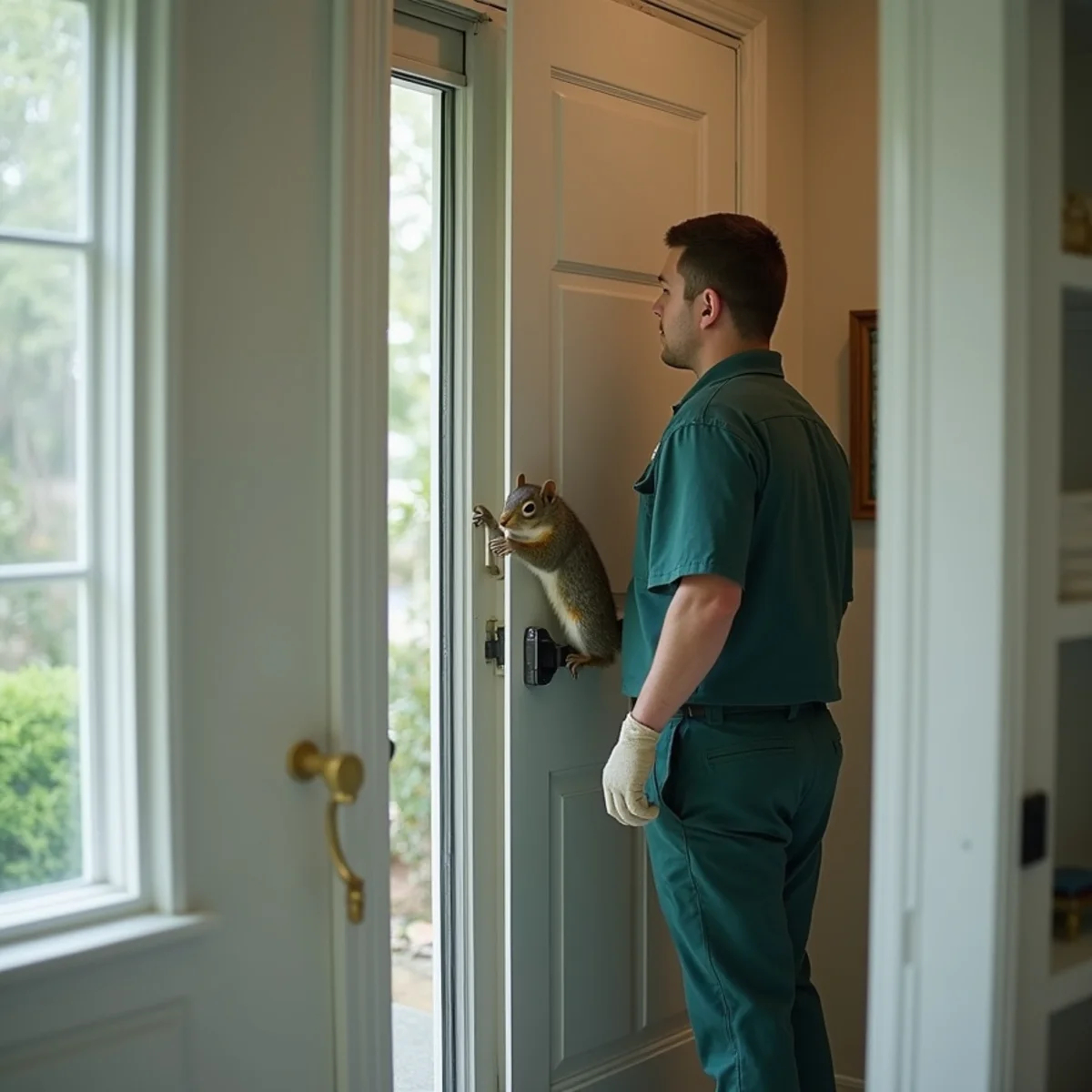
Step-by-Step Escape Route Creation: The Dark Room and Open Window Strategy
The most effective and humane technique to remove a loose squirrel requires exploiting their visual biology:
Step 1: Close all interior doors leading from the room into hallways, kitchens, or upper staircases.
Step 2: Turn off all interior lights, lamps, and televisions. Lower window blinds and pull curtains closed on every window in the room EXCEPT ONE.
Step 3: Open that single uncovered window as wide as possible, removing the screen completely. If a patio sliding glass door is available, open it wide.
Step 4: Exit the room immediately and shut the door behind you. Ensure all pets and family members remain quiet in adjacent rooms.
Step 5: In over 80% of daytime cases, the terrified squirrel will orient toward the single daylight opening and leap outside to safety within 15 to 30 minutes.
What Never to Do: Why Brooms, Cornering, and Pets Escalate Bite Risks
When a squirrel refuses to leave, homeowners often escalate the situation aggressively. Attempting to hit or herd a squirrel with brooms, hockey sticks, or throw blankets creates a dangerous cornered-animal reflex. Squirrels possess powerful jaws and long, chisel-like incisors engineered for cracking hickory nuts and black walnuts.
If grabbed or trapped in a corner, a squirrel will spin and bite repeatedly, causing deep lacerations and nerve damage to human hands. Furthermore, letting family dogs or cats into the room to 'catch' the squirrel frequently results in severe claw injuries to pet corneas and veterinary emergencies.
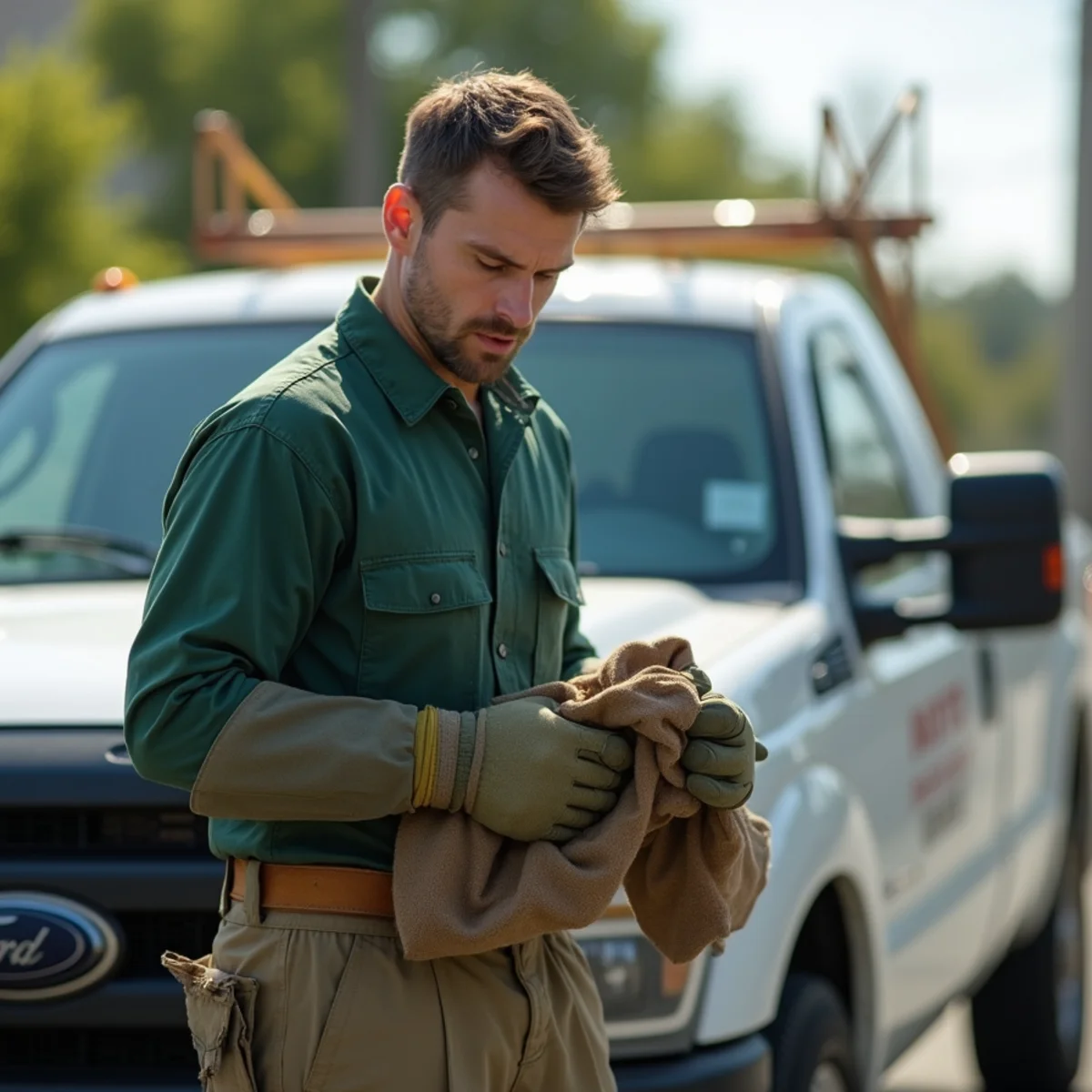
Hidden Harborages: Finding Trapped Squirrels in Wall Voids, Chimneys, and Ductwork
If the squirrel disappears while the room is closed, it has likely found an interior structural cavity. Common indoor hiding places include unsealed fireplace throat dampers, cold air HVAC return floor registers, kitchen soffits, and hollow wall studs reached through gaps beneath bathroom vanities.
Sayonara Pest Control technicians use specialized fiber-optic inspection cameras to inspect wall cavities without causing unnecessary drywall damage. We also deploy specialized humane wire box traps baited with peanut butter and sweet seed paste positioned directly along suspected wall runways.
Identifying the Roof Entry Point: Chewed Fascia Boards, Rotted Eaves, and Ridge Caps
If a squirrel entered your home, it almost certainly gained access through structural roof vulnerabilities. In mature wooded neighborhoods across Melville, Huntington, and Dix Hills, overhanging tree branches provide aerial highways directly to rooflines.
Squirrels constantly gnaw to keep their incisors worn down. They routinely chew through cedar siding, aluminum louvered gable vents, and rotted fascia corners where roof gutters meet eave boards. Locating and sealing this master entry hole is essential to prevent other neighborhood squirrels from claiming the vacated territory.
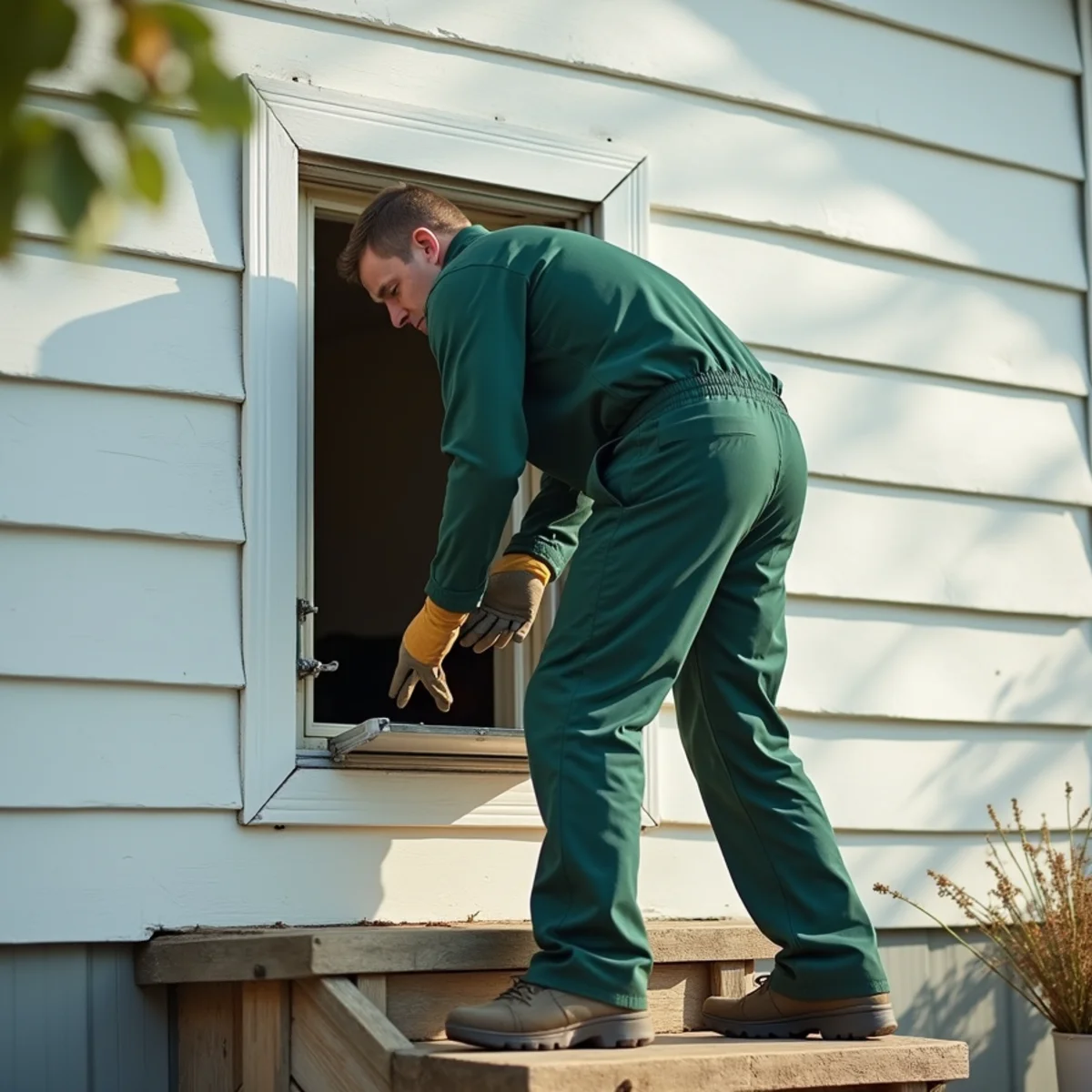
Chew-Proof Exclusion Standards: Galvanized Steel Hardware Cloth and Drip Edge Reinforcement
Standard spray foam, silicone caulk, and wood filler will not stop a squirrel; they will chew right through those materials overnight. Permanent exclusion demands structural metal reinforcements.
We install heavy 1/2-inch hot-dipped galvanized steel hardware cloth mechanically fastened over all attic louvers, ridge vents, and eave penetrations. We install heavy metal flashing along roof drip edges and trim overhanging tree branches back a minimum of 8 to 10 feet from the roofline. Every structural exclusion job includes our comprehensive multi-year warranty.
Indoor Squirrel Emergency Containment Checklist
- ✓Isolate the animal immediately: Close all interior doors leading out of the room to prevent the squirrel from running upstairs or into basements.
- ✓Turn off ceiling fans: Spinning fan blades will kill or horribly injure an airborne jumping squirrel, causing severe panic.
- ✓Create a single bright exit path: Darken the room by closing shades, but open one large exterior window or patio slider completely.
- ✓Remove pets and curious family members: Dogs and cats will corner the squirrel, provoking frantic bites and clawing attacks.
- ✓Never attempt bare-handed capture: Squirrel incisors can easily bite through leather gloves to the bone, transmitting bacterial infections.
- ✓Call licensed wildlife specialists: If the animal retreats into ductwork, walls, or attics, our team deploys humane live-catch traps and exclusion valves.
Advice from Our Melville Field Operators
When a squirrel tumbles down a chimney or races through an open back door into a Long Island living room, its stress level is off the charts. It views humans as giant predators and will leap off furniture, drapes, and walls searching for high escape points. People make the mistake of chasing it around with a broom or laundry basket, which causes the squirrel to chew window frames, knock over lamps, and hide inside couch upholstery. The secret is simple: isolate the room, open one exterior door to the outside, step back, and give the animal 15 minutes of dead silence. It will run right out.
Frequently Asked Questions
Do squirrels carry rabies on Long Island?
While any mammal can technically contract rabies, small rodents and squirrels rarely carry rabies and are not considered rabies vector species by the New York State Department of Health. However, squirrel bites carry serious risks of bacterial infections, including Streptococcus and tetanus.
What should I do if a squirrel is stuck in my chimney?
Keep the fireplace damper closed. Lower a thick 3/4-inch natural fiber rope (such as hemp or cotton) down from the chimney top, tying it securely to the chimney cap. This provides the squirrel with the traction needed to climb out on its own. Alternatively, call our wildlife extraction specialists.
Can squirrels chew through electrical wires in the attic?
Yes. Squirrels are responsible for a significant number of unexplained attic electrical fires. They gnaw on the plastic insulation of Romex electrical wiring, exposing live conductors that can spark and ignite nearby dry fiberglass or wood cellulose insulation.
Does Sayonara Pest Control relocate squirrels?
Under New York State DEC regulations, squirrels captured in residential settings must either be released humanely on the same property where caught or humanely managed according to state wildlife conservation guidelines. We prioritize exclusion and on-site release.
About Sayonara Pest Control
Based at 445 Broadhollow Rd, Suite 25 in Melville, NY, Sayonara Pest Control provides licensed extermination and humane wildlife trapping across Suffolk County, Nassau County, and NYC. Our focus is root-source elimination through Integrated Pest Management.