

If an animal is loose in your living area or you suspect venomous wasps or active termite swarms, do not disturb the nest or try DIY chemical foggers. Call our Melville technicians directly at (321) 496-4080 for 24/7 emergency dispatch.
Spring raccoon kits in Long Island attics require careful maternal reunion or humane multi-stage extraction. New York State DEC strictly prohibits unlicensed trapping or relocation beyond property lines due to rabies vector species (RVS) regulations. Never trap the mother outside while kits remain inside soffits, or she will violently tear through shingles and sheetrock to reach them. Call (321) 496-4080 for professional extraction.
In This Guide (Table of Contents)
- 01.Spring Nesting Cycles: Why Female Raccoons Choose Long Island Attics (March Through June)
- 02.New York State Wildlife Laws: Rabies Vector Species (RVS) and Relocation Bans
- 03.Locating the Maternal Den: Thermal Imaging and Acoustic Detection in Soffits
- 04.The Multi-Stage Eviction Process: Male Eviction Scent, One-Way Valves, and Kit Hands-On Removal
- 05.Structural Damage and Biohazard Decontamination: Raccoon Roundworm and Soiled Insulation
- 06.Permanent Architectural Exclusion: Drip Edge Flashing, Gable Vent Screening, and Chimney Caps
- 07.Frequently Asked Questions
Spring Nesting Cycles: Why Female Raccoons Choose Long Island Attics (March Through June)
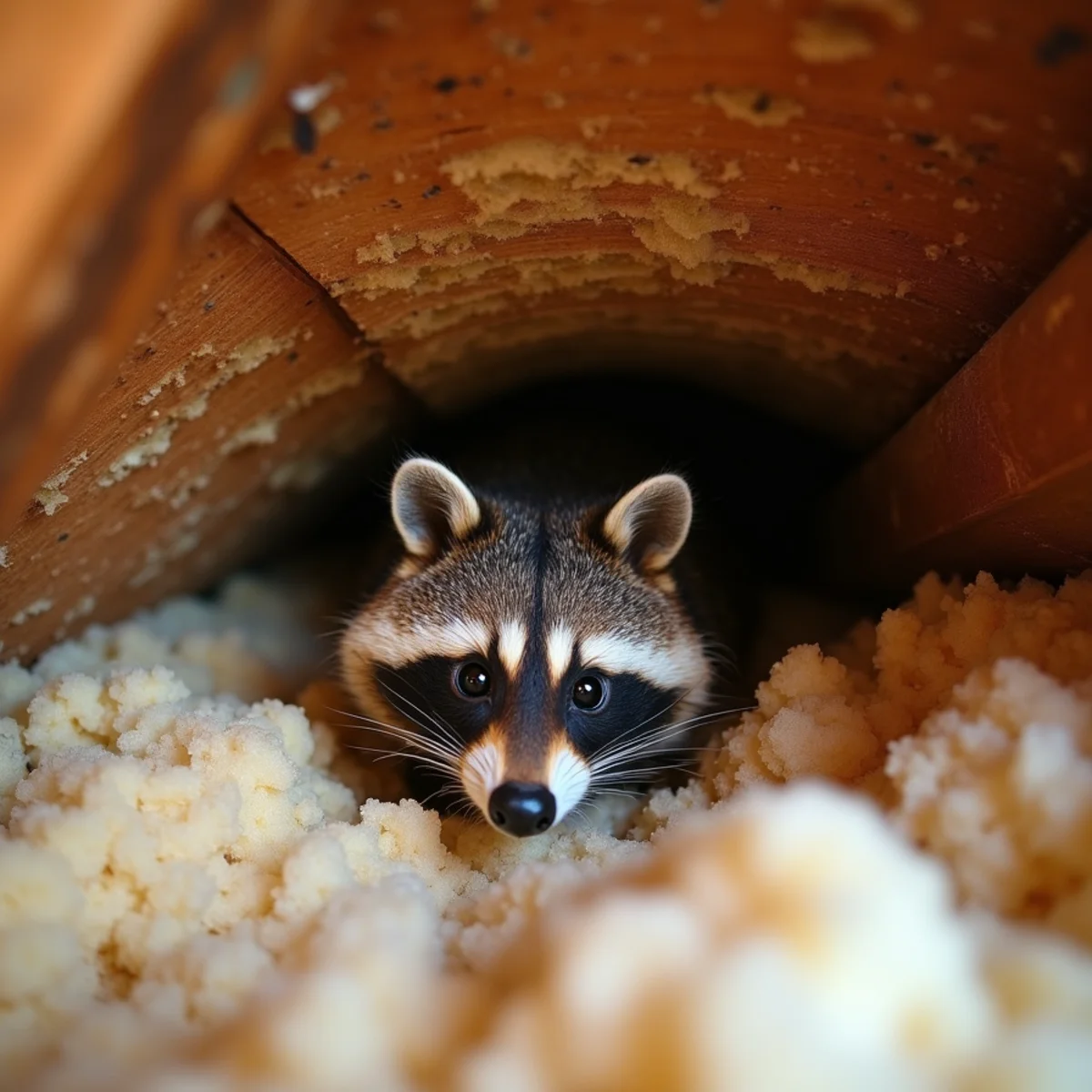
Female raccoons (Procyon lotor) begin seeking warm, secure maternity dens across Long Island in late winter. Pregnant mothers target residential attics because insulated roof cavities offer darkness, elevated warmth away from predators like coyotes and domestic dogs, and dry shelter from spring storms.
Using their dexterous front paws, adult raccoons can easily rip away rotted soffit vents, push up aluminum drip edges, or pry open plastic ridge vent caps. Once inside, the female clears a nesting bowl directly into fiberglass or blown cellulose insulation, giving birth to a litter of 3 to 6 blind, helpless kits between late March and early June.
New York State Wildlife Laws: Rabies Vector Species (RVS) and Relocation Bans
Homeowners must be aware that raccoons are classified as Rabies Vector Species (RVS) under New York State Environmental Conservation Law (ECL Section 11-0521). In New York, it is illegal for unlicensed individuals to trap, transport, or relocate a wild raccoon off the property where it was captured.
State biologists enforce this law strictly to prevent the transmission of the raccoon rabies virus strain across county boundaries. Only licensed Nuisance Wildlife Control Operators (NWCO) certified by the NYSDEC possess the legal authority, rabies vaccination protocols, and specialized training to handle wild raccoons humanely while upholding state disease containment standards.
Locating the Maternal Den: Thermal Imaging and Acoustic Detection in Soffits
Baby raccoons do not sound like adult raccoons. In their first few weeks of life, kits emit rhythmic, high-pitched vocalizations that mimic nesting baby birds or crying kittens. They are frequently concealed in the most inaccessible architectural pockets of the roofline—often at the narrow junction where roof rafters meet the exterior wall plate.
Sayonara Pest Control utilizes advanced FLIR thermal imaging cameras and acoustic borescopes to pinpoint the exact heat signatures of hidden litters without ripping down unnecessary sections of sheetrock. This forensic accuracy ensures rapid, targeted extraction while minimizing structural demolition.
The Multi-Stage Eviction Process: Male Eviction Scent, One-Way Valves, and Kit Hands-On Removal
Humane raccoon removal requires a multi-phase biological strategy tailored to maternal instincts:
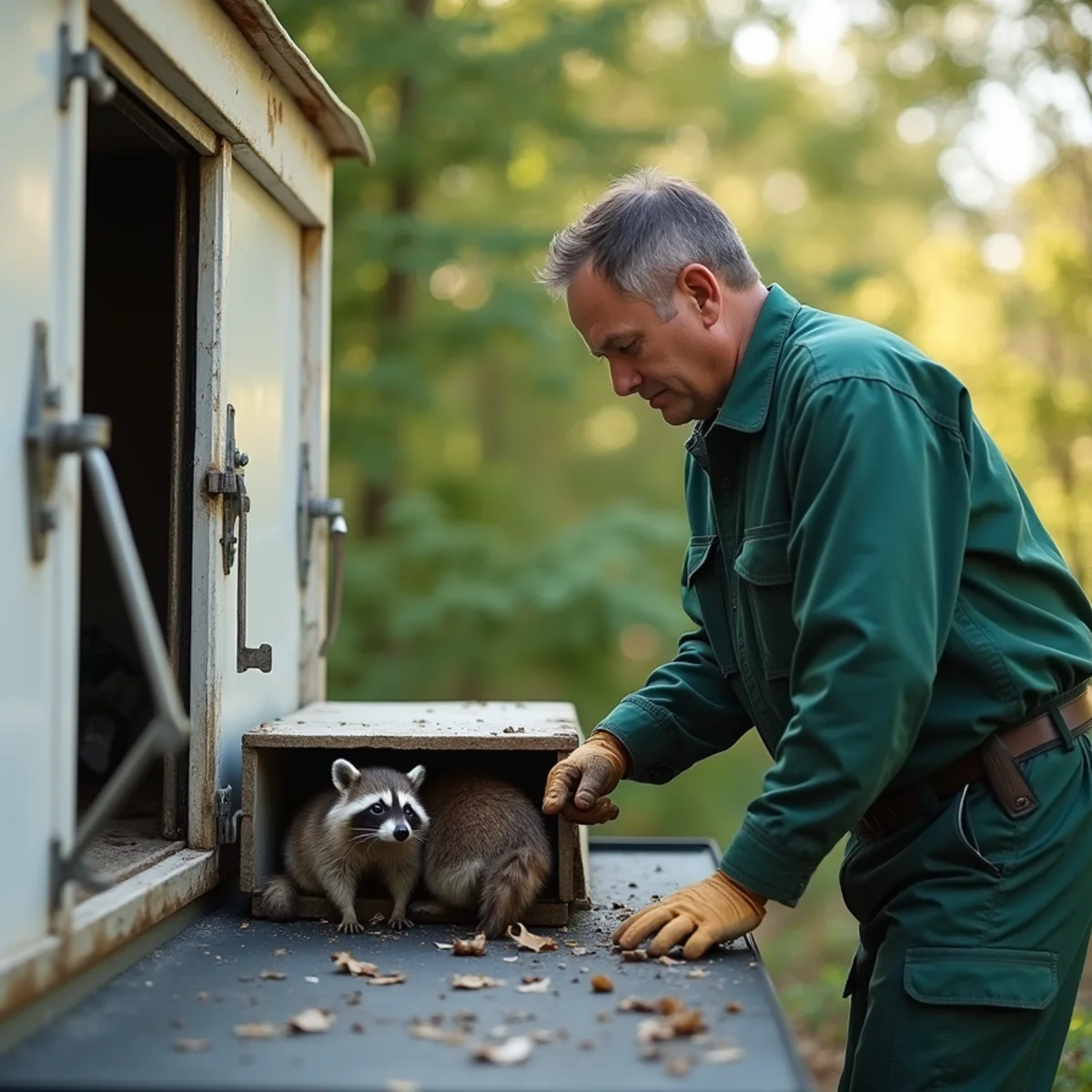
Step 1: If the kits are accessible, certified technicians wear bite-proof gauntlets to gently retrieve the baby raccoons by hand, placing them in an insulated, predator-safe warm box placed near the entry point.
Step 2: If kits are deep inside a vaulted ceiling, technicians apply professional male raccoon eviction fluid (a natural biological scent that simulates a predatory boar raccoon). Female raccoons instinctively flee hostile adult males and will voluntarily carry each baby out of the attic to a pre-established alternate hollow tree den within hours.
Step 3: Once thermal monitoring verifies the attic is completely clear of all animals, heavy-duty one-way doors are removed and permanent architectural exclusion is completed.
Structural Damage and Biohazard Decontamination: Raccoon Roundworm and Soiled Insulation
Raccoons establish designated communal latrines where they repeatedly deposit urine and feces. Raccoon droppings are dangerous because they frequently harbor microscopic eggs of Baylisascaris procyonis (raccoon roundworm). These hardy parasite eggs remain viable in dry attic dust for years and pose severe neurological health risks to humans and pets if accidentally ingested or inhaled.
Our wildlife remediation crew removes contaminated insulation, vacuums attic floors using HEPA-filtered vacuum extractors, and fogs structural framing with broad-spectrum virucides and enzymatic deodorizers to eliminate biological odors that attract future wildlife.
Permanent Architectural Exclusion: Drip Edge Flashing, Gable Vent Screening, and Chimney Caps
Raccoons are powerful animals capable of exerting significant muscle force. Patching a hole with builder's caulk, foam spray, or plastic mesh is futile; a determined raccoon will shred those materials in minutes.
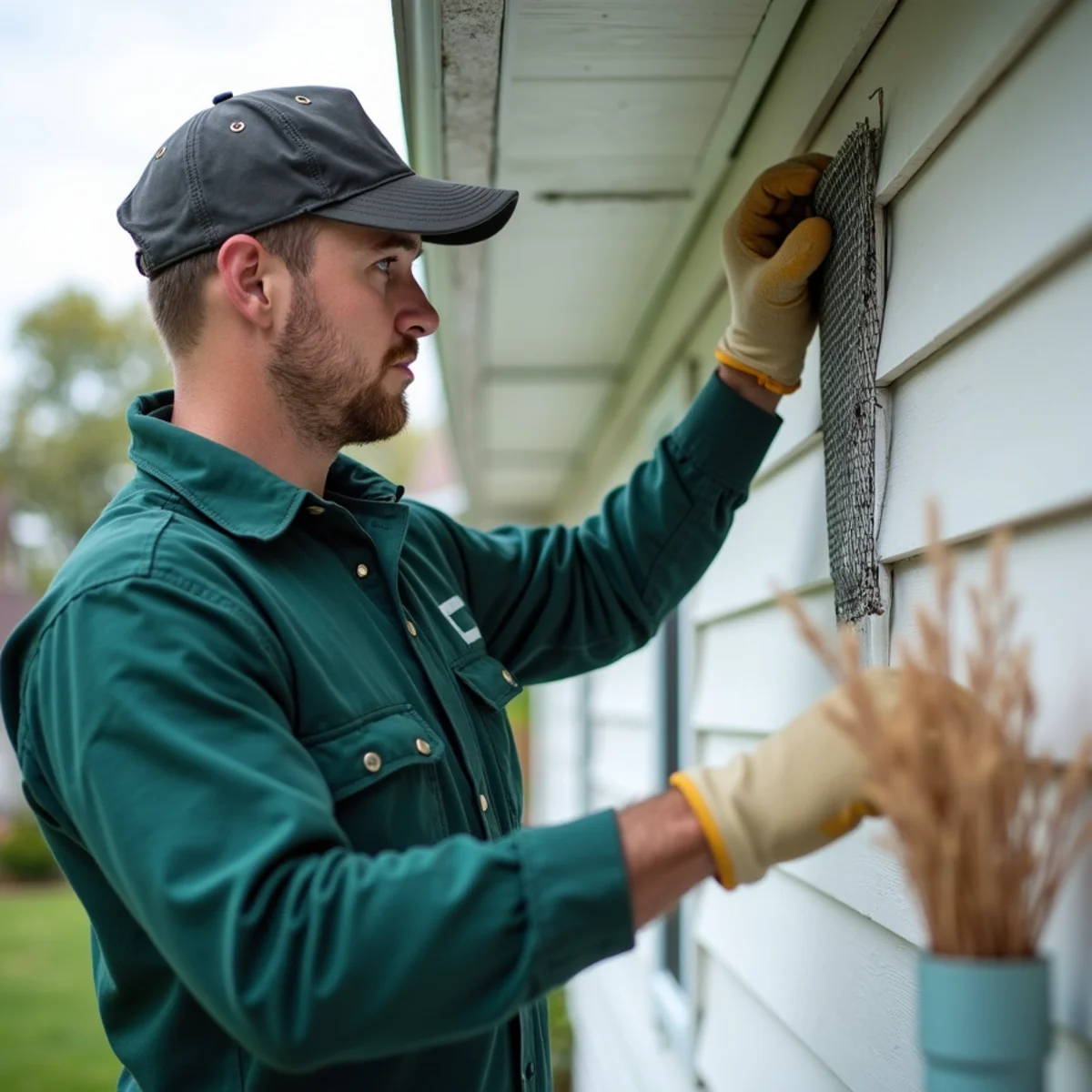
We install commercial-grade 16-gauge hot-dipped galvanized steel hardware cloth securely bolted across all gable louvers, soffit returns, and roof-to-fascia gaps using heavy mechanical fasteners. We reinforce perimeter drip edges with heavy metal flashing and install custom chimney caps. Every exclusion installation includes our multi-year chew-proof warranty.
Raccoon Kits in Attic Emergency Management Checklist
- ✓Do not trap or cage the adult female outside: Separating mother raccoons causes destructive frantic break-ins and leaves kits to die inside walls.
- ✓Locate nesting sounds: Maternal nests are characterized by high-pitched chattering, bird-like chirping, or whimpering in roof soffits.
- ✓Never use poison or ammonia bombs: Chemical fumes can suffocate kits in hidden wall voids, creating severe structural biohazards.
- ✓Do not seal roof holes during spring nesting: Sealing entries permanently traps nursing kits inside attic insulation.
- ✓Wear an N95 respirator if entering the attic: Raccoon feces carry Baylisascaris procyonis roundworm eggs that are hazardous if inhaled.
- ✓Call licensed DEC wildlife operators: Our certified specialists deploy thermal imaging and hands-on kit retrieval boxes for safe maternal transfer.
Advice from Our Melville Field Operators
Every spring from March through June across Huntington, Plainview, and Dix Hills, we receive frantic calls about chattering in the attic that sounds like baby birds. It is almost always a nursing female raccoon with a litter of four to six kits nestled deep inside a soffit or behind a knee wall. If you hire an exterminator who sets a cage trap in your yard, catches the mother, and drives away, you have created a disaster. The motherless babies will starve, decompose, and generate thousands of flies within a week. Humane extraction means finding the kits, placing them in an insulated reunion box, and allowing the mother to relocate them one by one to an alternate den.
Frequently Asked Questions
Can I wait for the raccoon babies to grow up and leave on their own?
Waiting is rarely advisable. Raccoon kits remain dependent on their mother for 8 to 12 weeks. During this time, they become mobile, tear through attic ductwork, urinate heavily across ceiling drywall, and chew electrical wiring, creating severe fire hazards and thousands of dollars in structural damage.
Will a mother raccoon abandon her babies if handled by humans?
No. The myth that mother wildlife will abandon offspring touched by humans is false. Raccoon maternal instincts are exceptionally strong; a mother will search relentlessly for her kits and relocate them to safety if given the opportunity.
What should I do if a baby raccoon falls through my ceiling sheetrock?
Keep children and pets out of the room immediately and do not touch the baby bare-handed. Place a laundry basket or cardboard box over the fallen kit with a light weight on top, and call Sayonara Pest Control at (321) 496-4080 for emergency extraction.
Does homeowners insurance cover raccoon damage in attics?
Most standard homeowners insurance policies on Long Island cover sudden damage caused by wild animals, such as torn ductwork and contaminated insulation replacement, though gradual wear or pest maintenance exclusions may apply. We provide comprehensive photo documentation and itemized repair estimates for insurance adjusters.
About Sayonara Pest Control
Based at 445 Broadhollow Rd, Suite 25 in Melville, NY, Sayonara Pest Control provides licensed extermination and humane wildlife trapping across Suffolk County, Nassau County, and NYC. Our focus is root-source elimination through Integrated Pest Management.