

If an animal is loose in your living area or you suspect venomous wasps or active termite swarms, do not disturb the nest or try DIY chemical foggers. Call our Melville technicians directly at (321) 496-4080 for 24/7 emergency dispatch.
The most common ants infesting Long Island homes are carpenter ants, pavement ants, odorous house ants, and pharaoh ants. Identifying the species is critical: pavement ants seek sweets and greasy foods along foundation slabs, while carpenter ants excavate damp structural wood near plumbing leaks or rotted window sills. Call Sayonara Pest Control at (321) 496-4080 for targeted colony baiting and moisture remediation.
In This Guide (Table of Contents)
- 01.Long Island Ant Identification: Pavement, Carpenter, Odorous House, and Pharaoh Ants
- 02.Soil and Architectural Factors: Why Sandy Soil and Slab Foundations Accelerate Ant Entry
- 03.The Danger of Over-the-Counter Sprays: How Repellents Cause Colony Budding
- 04.Targeted Baiting Strategies: Non-Repellent Transfer Chemistry and Slow-Acting Toxicants
- 05.Moisture Remediation and Wood Protection: Addressing the Root Cause of Carpenter Ants
- 06.Seasonal Perimeter Defense: Establishing Exterior Protective Barriers from April to October
- 07.Frequently Asked Questions
Long Island Ant Identification: Pavement, Carpenter, Odorous House, and Pharaoh Ants
Ant infestations are the single most common residential pest complaint across Suffolk and Nassau counties. However, effective treatment requires precise entomological identification. The four dominant species each exhibit distinct behaviors:
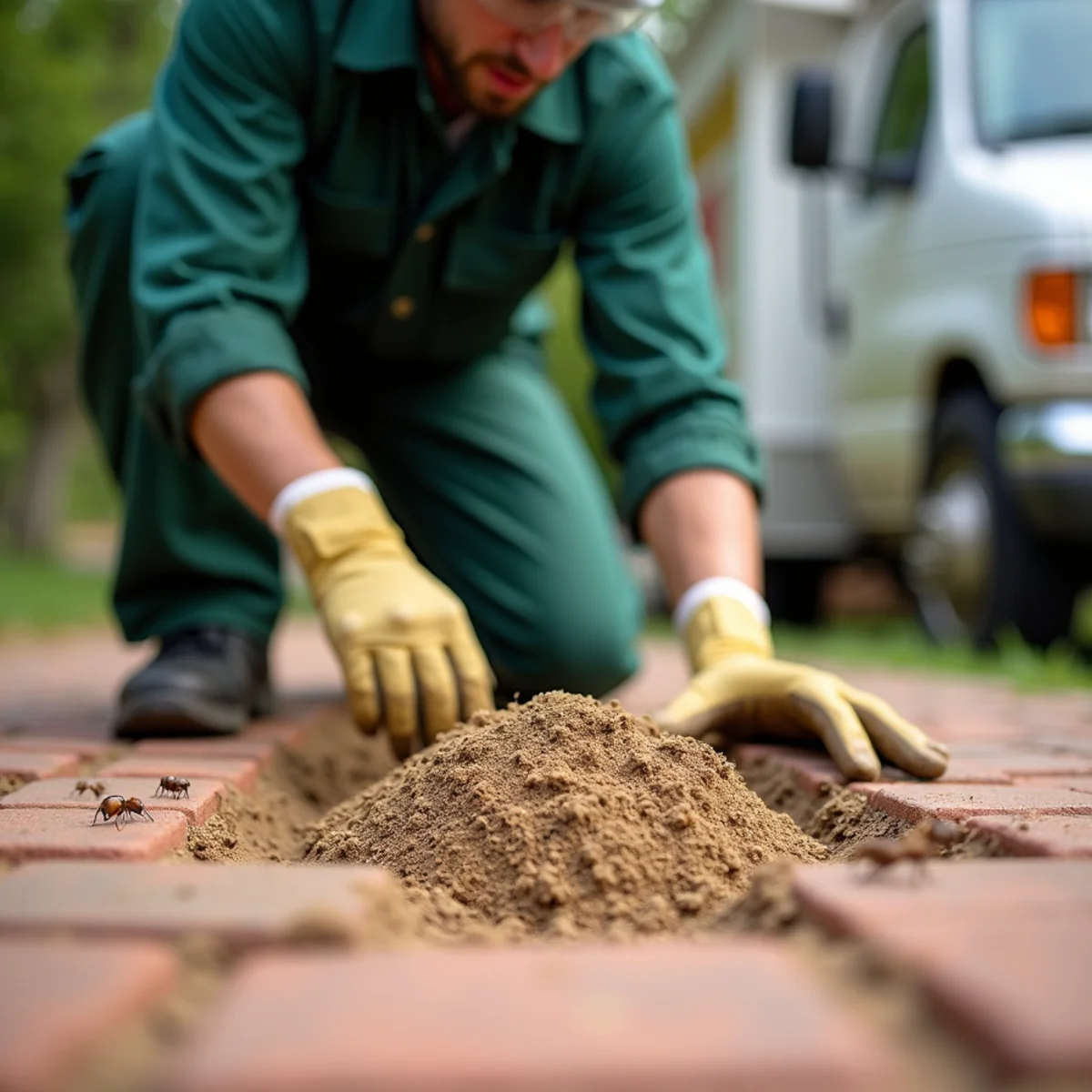
1. Pavement Ants (Tetramorium immigrans): Small (1/8-inch) dark brown ants that nest beneath concrete patios, driveways, and basement foundation slabs, kicking up small mounds of sand along cracks.
2. Carpenter Ants (Camponotus pennsylvanicus): Large (1/4 to 1/2-inch) black ants that do not eat wood, but hollow out moist, decaying structural timbers to build satellite nesting galleries.
3. Odorous House Ants (Tapinoma sessile): Small brown ants known for emitting a pungent rotten coconut odor when crushed, frequently invading pantries during rainy spring weather.
4. Pharaoh Ants (Monomorium pharaonis): Tiny yellowish ants notorious for infesting hospitals and apartment complexes, nesting inside wall voids, switch plates, and pipe chases.
Soil and Architectural Factors: Why Sandy Soil and Slab Foundations Accelerate Ant Entry
Long Island's unique geological formation—composed of glacial outwash sand, gravel, and porous loam—creates an ideal environment for subterranean ant colonies. Sand allows worker ants to excavate deep, well-aerated subterranean tunnel networks with minimal energy expenditure.
Furthermore, post-war architectural designs common throughout Plainview, Bethpage, and Melville feature poured concrete slab foundations. Over decades, slight settling creates hairline stress cracks and expansion joint gaps beneath flooring. Subterranean pavement ant colonies thrive directly beneath heated slabs, emerging up through carpet tack strips, plumbing pipe sleeves, and tile grout lines.
The Danger of Over-the-Counter Sprays: How Repellents Cause Colony Budding
Consumer retail pest control sprays rely almost exclusively on synthetic pyrethroids (such as bifenthrin or cypermethrin) formulated as contact repellents. When a homeowner sprays an active foraging trail, the repellent chemical alerts the colony that the foraging path is toxic.
Rather than eliminating the nest, the queen initiates emergency colony budding. The colony fragments into multiple smaller satellite nests distributed throughout adjacent wall voids, bathrooms, and subflooring. Within two weeks, what was a minor localized ant issue near the kitchen sink transforms into a systemic infestation across the entire home.
Targeted Baiting Strategies: Non-Repellent Transfer Chemistry and Slow-Acting Toxicants
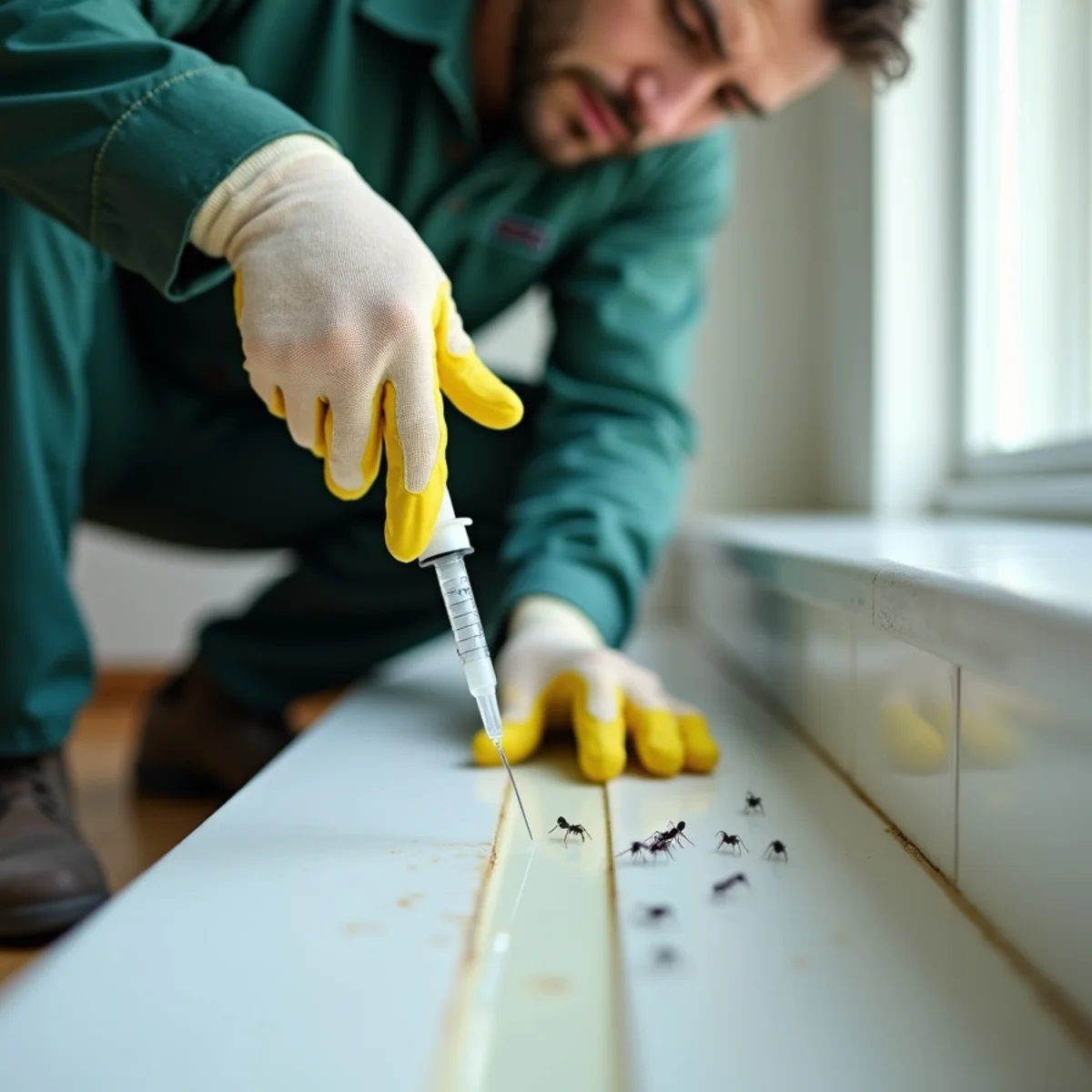
Professional ant elimination relies on exploiting social trophallaxis—the mutual exchange of regurgitated food between colony members. Sayonara Pest Control utilizes advanced non-repellent transfer insecticides and professional gel bait matrices containing slow-acting active ingredients.
Foraging worker ants cannot detect the chemical. They consume the carbohydrate or protein-based bait, walk across treated surfaces, and carry the toxicant back into the deep subterranean nest on their bodies. Over 7 to 14 days, the slow-acting compound is shared with nursing workers, developing larvae, and ultimately the reproductive queens, collapsing the entire colony structure from the inside out.
Moisture Remediation and Wood Protection: Addressing the Root Cause of Carpenter Ants
Carpenter ants require elevated wood moisture content (typically exceeding 15 to 20%) to soften cellulose and sustain nest humidity. If you have carpenter ants inside your home, an unaddressed moisture intrusion problem almost always exists.
Common moisture triggers in Long Island homes include leaking shower pans, roof valley flashing failures, gutter overflows that soak fascia boards, and exterior soil or mulch piled directly against foundation sill plates. Our technicians perform moisture mapping using digital pinless moisture meters, locating hidden structural leaks that must be repaired to ensure permanent carpenter ant eradication.
Seasonal Perimeter Defense: Establishing Exterior Protective Barriers from April to October
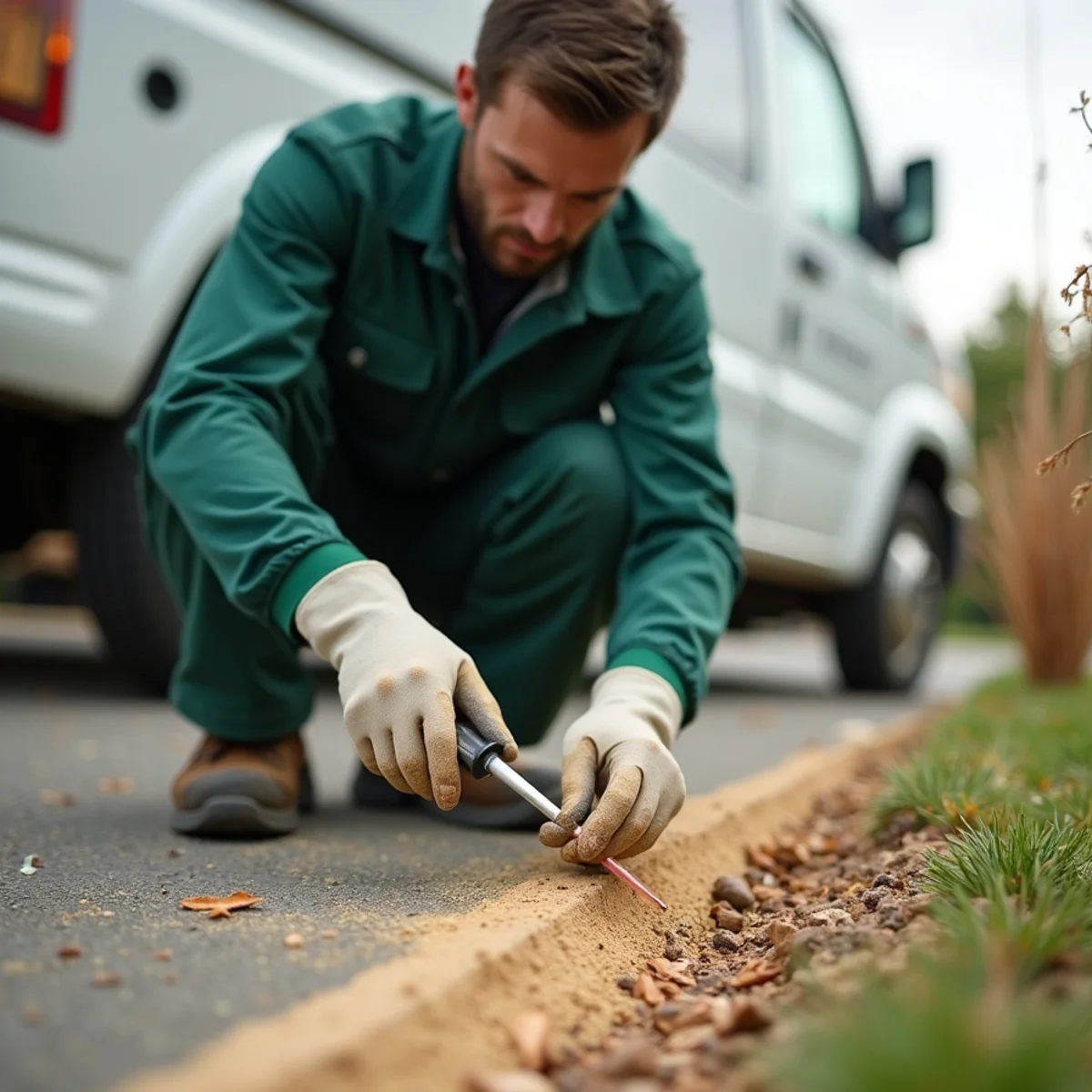
Preventing seasonal ant invasions requires creating an uninterrupted exterior protective barrier before worker ants initiate outdoor foraging in early spring. Between April and October, our certified technicians establish a multi-tier perimeter defense.
We apply micro-encapsulated liquid barriers around foundation walls, treat expansion joints and weep holes, apply granular protein baits along landscaped mulch beds, and inject specialized insecticidal dusts into exterior wall penetrations. This continuous perimeter defense keeps ants outdoors where they belong.
Long Island Homeowner Ant Prevention & Triage Checklist
- ✓Photograph foraging workers up close: Send clear photos to our technicians to distinguish harmless pavement ants from wood-destroying carpenter ants.
- ✓Never spray retail repellent aerosols on ant trails: Spraying causes colony budding, splitting one ant colony into multiple hidden satellite nests.
- ✓Wipe down kitchen countertops with vinegar: Acetic acid breaks the invisible chemical pheromone trails that worker ants follow to food sources.
- ✓Fix plumbing leaks beneath sinks and tubs: Carpenter ants require moisture-damaged wood to establish viable nesting galleries.
- ✓Keep outdoor mulch 12 inches away from foundation walls: Organic mulch holds moisture and provides ideal nesting substrate against siding.
- ✓Schedule perimeter barrier defense: Our quarterly program applies non-repellent transfer chemistry around foundation sills for complete colony elimination.
Advice from Our Melville Field Operators
When Long Island homeowners see a trail of ants marching across the kitchen counter in spring, their immediate reaction is to spray them with a can of retail bug spray. That is the worst thing you can do. Most retail sprays are contact repellents. While they kill the 50 ants you see, the colony detects the chemical barrier and panics. In species like odorous house ants and pharaoh ants, this triggers a biological survival process called 'budding'—the colony splits into 3 or 4 separate satellite colonies with multiple queens scattered across your bathroom walls and pantry. Use slow-acting non-repellent baits that workers carry back to feed the queen.
Frequently Asked Questions
Do carpenter ants actually eat the wood in my house?
No. Unlike termites which consume wood cellulose for nutritional digestion, carpenter ants do not eat wood. They use their strong mandibles to excavate hollow galleries in moist wood, depositing sawdust-like piles of 'frass' outside the nest entrance.
Why do ants suddenly invade my kitchen after heavy rain?
Heavy Long Island rainstorms flood subterranean ant tunnels and saturate sandy soil. When their underground nests are submerged, ant colonies migrate upward into dry residential foundations, following plumbing pipes into kitchens and bathrooms in search of dry ground and food.
Are ant bait stations safe around dogs and cats?
Yes. When installed by Sayonara Pest Control, all gel baits and tamper-resistant bait stations are placed in secluded interior crevices, behind appliances, and inside locked plastic stations inaccessible to household pets and children.
How long does it take to completely eliminate an ant infestation?
With professional non-repellent transfer chemistry and targeted baiting, noticeable ant activity drops by 70% within 48 to 72 hours. Complete colony collapse, including queen eradication, typically occurs within 7 to 14 days.
About Sayonara Pest Control
Based at 445 Broadhollow Rd, Suite 25 in Melville, NY, Sayonara Pest Control provides licensed extermination and humane wildlife trapping across Suffolk County, Nassau County, and NYC. Our focus is root-source elimination through Integrated Pest Management.